
Terrorist Financing Developments You Shouldn't Miss from FATF
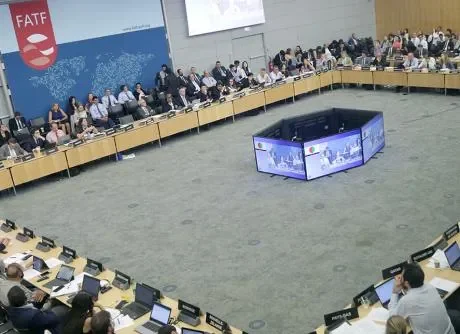
In mid-June 2026, FATF held its June plenary, where counter-terrorist financing remained a prominent topic. The plenary also pointed towards areas of concern, particularly the exploitation of mainstream digital platforms for terrorist financing purposes. For practitioners, these developments provide an indication of both FATF’s current priorities and the direction of future policy and regulatory attention.
Keep reading to learn how this will translate into greater terrorist-financing detection requirements for regulated entities.
Mutual Evaluations Adopted
FATF adopted the mutual evaluation reports of Canada and Türkiye during the plenary. While the reports have not yet been released publicly, publication is expected in September–October. While Canada will not be on the grey list, we will almost certainly receive enhanced follow-up to address deficiencies/areas for improvement, where we will have to demonstrate effectiveness and outcomes relating to all our deficiencies (one of which is likely to be a lack of terrorist financing prosecutions).
Changes to the Grey List
Algeria and Namibia Removed
FATF removed both Algeria and Namibia from its list of jurisdictions under increased monitoring (the “grey list”). Algeria’s removal is the country’s third exit from the list. Algeria had most recently been grey-listed in October 2024. While FATF standards evolve, which can lead to states being grey-listed over and over again, Algeria’s repeated grey-listing raises questions about the effectiveness of FATF recommendations for encouraging AML/CFT measures, and whether the current timeframe for mutual evaluations is sufficient.
Namibia, meanwhile, had been under increased monitoring since February 2024.
The removals indicate that both jurisdictions have addressed the strategic deficiencies identified by FATF and completed the action plans agreed upon with the organization.
Iraq Added to the Grey List
Iraq was added to the grey list for the second time, having previously been listed in 2008.
Several of Iraq’s outstanding deficiencies relate directly to terrorist financing. FATF identified the need for Iraq to demonstrate more effective terrorist financing investigations and prosecutions, strengthen technical compliance related to its terrorist financing offence, and develop a more robust understanding of terrorist financing risks within the non-profit organization (NPO) sector.

Do you want to learn more about financial intelligence and how to use it in research, investigations, and analysis? Our Financial Intelligence Fundamentals course is for you! This course is perfect for people new to financial intelligence and seasoned professionals. Enroll today!
Bosnia and Herzegovina Added to the Grey List
Bosnia and Herzegovina was also added to the grey list, marking its second appearance after previously being listed between 2016 and 2018.
Among other measures, FATF has called on Bosnia and Herzegovina to demonstrate a more proactive approach to terrorist financing investigations, clarify the interpretation and application of its terrorist financing offence, and strengthen the implementation of targeted financial sanctions related to terrorism and terrorist financing.
Looking Ahead: FATF Focus on Terrorist Financing in Digital Ecosystems
FATF also signalled continued attention to evolving terrorist financing methods online. The organization announced an upcoming publication examining terrorist financing activity conducted through social media platforms, instant messaging applications, and streaming services.
The project reflects growing concern that terrorist actors are increasingly leveraging mainstream digital platforms to solicit donations, facilitate financial transfers, advertise fundraising campaigns, and connect supporters with financial facilitators. While cryptocurrencies often receive significant attention in public discussions of terrorist financing, FATF’s focus underscores the continued importance of conventional online platforms in facilitating financial support networks.
Key Takeaway
The latest plenary reinforces a broader trend in FATF’s approach to counter-terrorist financing: effectiveness matters. The grey-listing of Iraq and Bosnia and Herzegovina reflects continued scrutiny of countries’ ability to investigate, prosecute, and disrupt terrorist financing in practice, while FATF’s forthcoming work on social media and messaging platforms highlights increasing concern with the digital environments where terrorist financing activity now occurs. In terms of terrorist financing, this focus on effectiveness and outcomes will be translated to national regulators, which in turn will require greater identification of terrorist financing activity in regulated sectors. Fintechs, banks, money service businesses, and more, will all be under increased pressure to better detect and report suspected terrorist financing activity.
© 2026 Insight Threat Intelligence Ltd. All Rights Reserved.
This article and its contents are protected by Canadian copyright law. Except as otherwise provided for under Canadian copyright law, this article and its contents may not be copied, published, distributed, downloaded or otherwise stored in a retrieval system, transmitted or converted, in any form or by any means, electronic or otherwise, without the prior written permission of the copyright owner.