
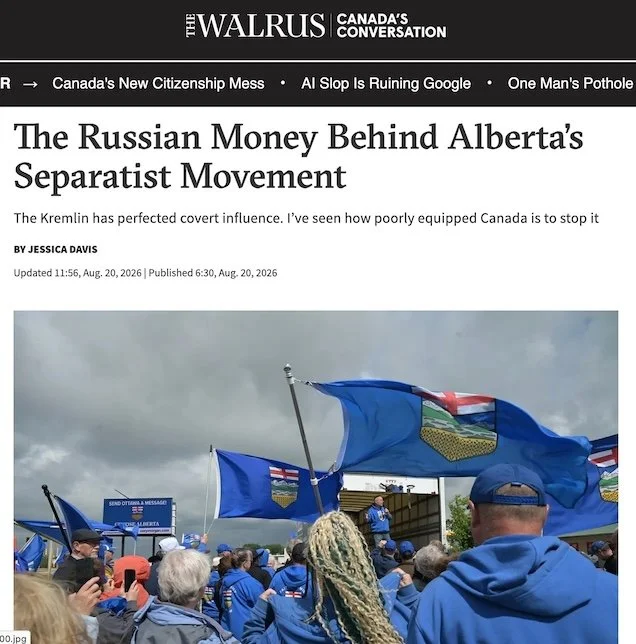
Illicit Political Finance in Alberta’s Separatist Movement?
The Walrus published an article by Jessica Davis in August 2026, called, “The Russian Money Behind Alberta’s Separatist Movement”. In this article Jessica shares the background and impetus behind the article.
The $50 Million Signal: What Revenue-Sharing Reveals About the al-Qaeda Network's Resilience
What does a $50 million ransom payment reveal about al-Qaeda’s financial networks? Our analysis of the UN Monitoring Team’s 38th report examines how the payment was distributed across affiliates and what it signals about the group’s continued financial integration.

New Project Announcement: Bridging the Divide: Cryptocurrency, Sanctions Evasion, and the Fragmentation of Global Finance
A new SSHRC-funded research project will explore how cryptocurrencies are reshaping sanctions evasion and fragmenting the global financial system. Learn about the project's goals, its multidisciplinary research network, and opportunities to collaborate on one of the most pressing challenges in illicit finance.
New Research: Terrorist Use of Hybrid Threat Finance Networks
Terrorist financing is evolving. Rather than abandoning traditional methods, extremist groups are combining cash, banks, hawala networks, and cryptocurrencies into sophisticated hybrid financial networks that are harder to detect and disrupt. This briefing explores how these systems operate, why digital assets are becoming increasingly important, and what governments and the private sector can do to counter the threat.
Canadaland Podcast: Shooter-for-Hire Networks and State Connections
In this article we share the latest Canadaland podcast episode covering a shooter-for-hire-networks and state connections which aired in late June 2026.
Montréal Attack
Canada has had it’s first terrorist attack in over two years. In this article we share a podcast from the Secureline where they discuss the June 2026 Montréal Attack covering its significance and unfortunately how quickly the incel-misogynistic motivation was downplayed.
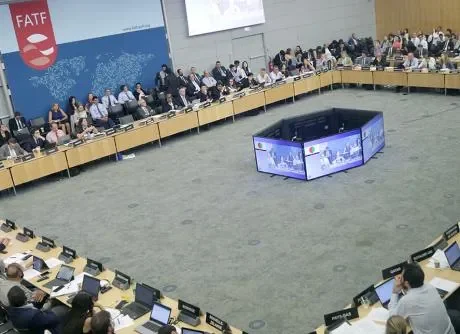
Terrorist Financing Developments You Shouldn't Miss from FATF
The June 2026 Financial Action Task Force (FATF) plenary highlighted important updates in how terrorist financing is being addressed globally. This article explores the key developments, emerging areas of concern, and what they signal for future regulatory focus and compliance expectations across the financial sector.

How Much Bang for the Buck? Exploring the Effects of Ransom Payments on Terrorist Activity in West Africa
Kidnapping for ransom has become an increasingly important source of terrorist financing in the Sahel, but does paying ransoms actually lead to more terrorism. In this edition of our Research Reads we explore the relationship between ransom payments and the frequency and intensity of terrorist attacks in West Africa.
CTF With Jessica Davis & Stephen Reimer
Check out this recorded live chat between Jessica Davis and Stephen Reimer titled, “CTF with Jessica Davis & Stephen Reimer”
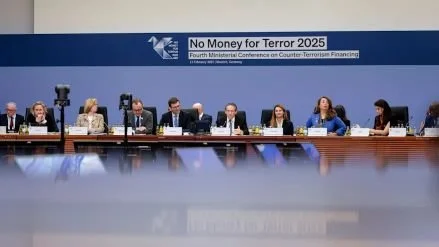
Why Global Statements on Terror Finance Set us up for Failure
Introduced in April 2018, the "No Money for Terror" conference is an international ministerial summit established to combat illicit finance and strengthen global counter-terrorism financing standards. However, a closer look reveals systemic vulnerabilities within its core strategy. This commentary breaks down why the conference actually creates the conditions for its own failure in achieving these critical objectives—and how its current framework may inadvertently undermine the global fight against terror.

The entirely new police force that Canada rather quietly unveiled
This guest article written by Dr. Jessica Davis, for The Line podcast looks at the introduction of Bill C-29, and the creation of a new federal police force in Canada focused on investigating financial crimes.

Iran's financial tradecraft on the blockchain
As the economic impacts of the Iran-Israel-US war become apparent, it is clear that Iran’s economy has been badly damaged. This third article in the Axis of Illicit Finance series explores Iran’s use of financial tradecraft and how the regime integrates that with cryptocurrency to hide the source and destination of funds.
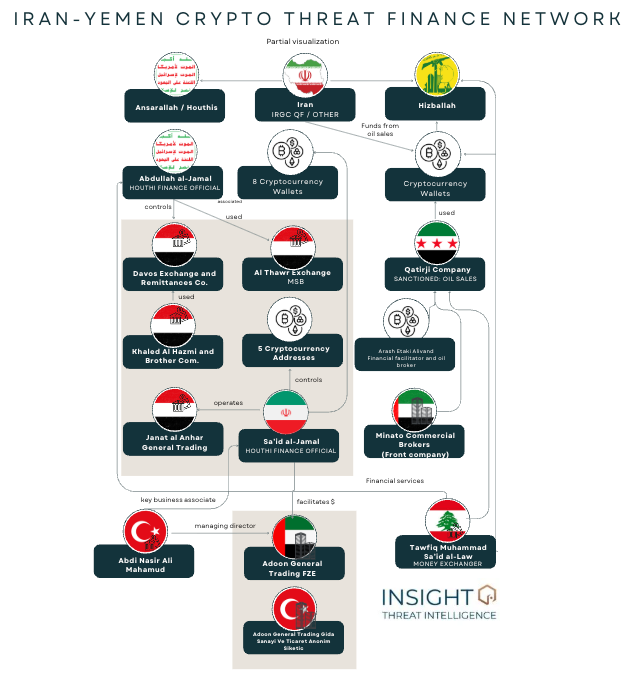
From Tehran to Sana’a: Cryptocurrency and Sanctions Evasion in the Axis of Illicit Finance
As sanctions tighten and geopolitical pressures intensify, Iran is increasingly relying on cryptocurrency to support its allies. This second article in the Axis of Illicit Finance series examines how Iran moves funds to the Houthis using cryptocurrency and the networks that underpin this capability.
Innovation at the Margins, but Continuity at the Core: How ISIL and AQ Are Adapting—and Enduring
ISIL, Al-Qaeda, and associated groups are slowly adapting to counterterrorism efforts, but their core financing methods remain the same. This article reviews the 37th United Nations Monitoring Team report, highlighting key terrorist financing patterns and how these organizations sustain themselves through both innovative and traditional methods.
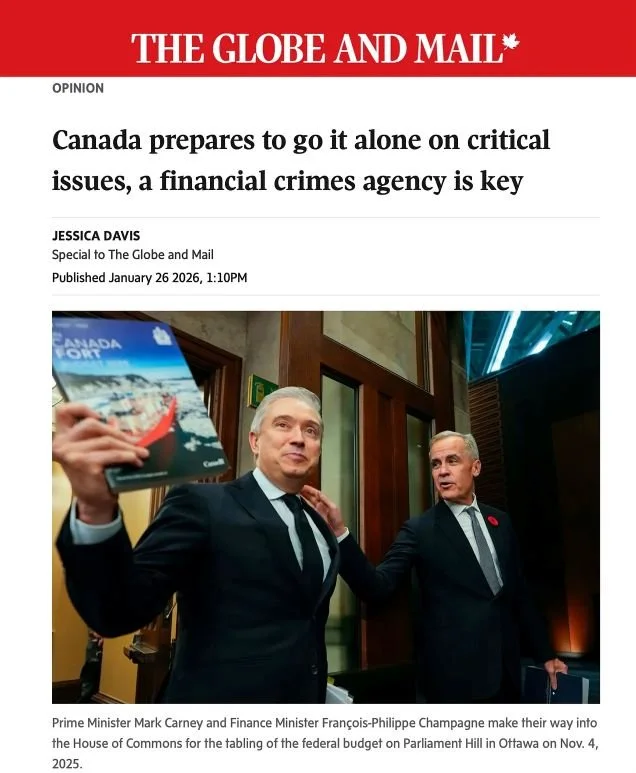
A Proposal: A Strategic Mandate for Canada's Financial Crimes Agency
This opinion piece was published in the The Globe and Mail in January 2026. This article provides a strategic mandate for Canada’s future Financial Crimes Agency, highlighting the urgent need to combat fraud, ransomware, sanctions evasion, and professional money laundering in a shifting geopolitical and financial landscape.
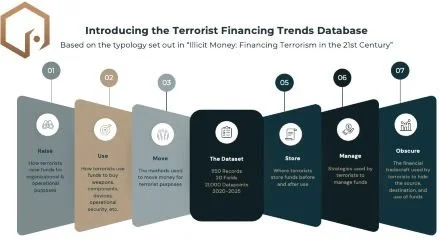
Trends in Terrorist Financing 2020-2025
After years of building, cleaning, and analyzing, we’re sharing a one-of-a-kind dataset that changes the conversation on terrorist financing. This article launches the Trends in Terrorist Financing 2020-2025 series, highlighting evidence-driven insights on how terrorist raise, use, move, store, and manage funds, cutting through speculation with hard data and contextual analysis.
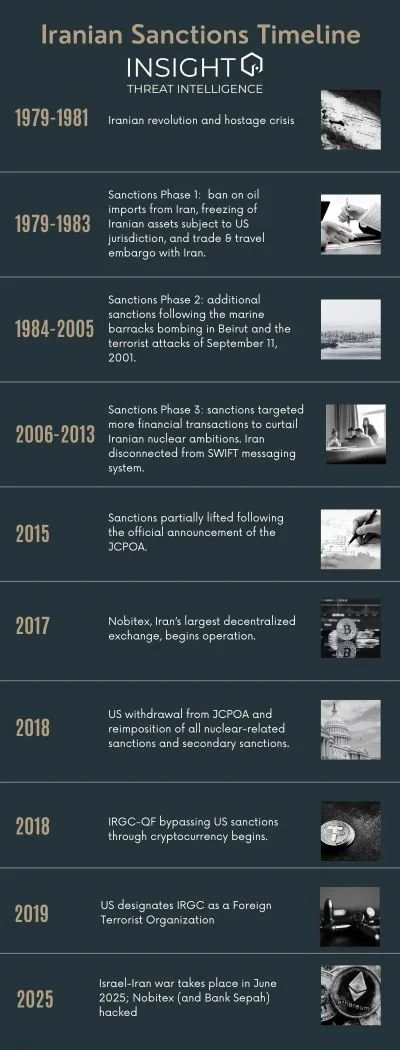
The Axis of Illicit Finance: Iran’s Crypto Strategy Explained
As sanctions tighten and geopolitical pressure mounts, Iran is turning to cryptocurrency to keep its economy moving. This article launches an eight-part series in examining how Iran uses crypto to evade sanctions and situates it within a wider illicit financial ecosystem.

JNIM's $50 million windfall
Jama’at Nusrat al-Islam wal-Muslimin (JNIM) secured a $50 million ransom for hostages, along with arms, ammunition, and the release of prisoners. This article examines how the group finances its operations, allocates resources, and the potential impact of these funds on regional security in West Africa

The $177 Million Message: FINTRAC Raises the Bar for Crypto Compliance
FINTRAC imposed a record-breaking $177 million penalty on a BC-registered virtual asset provider operating without staff or physical presence in Canada. This article highlights the regulatory and compliance challenges posed by global crypto platforms, examines the implications for AML/CFT enforcement, and explores how such entities can facilitate illicit finance, sanction evasion, and terrorist financing.

Chokepoints: How the Global Economy Becomes a Weapon of War
In this edition of Research Reads we review Chokepoints: How the Global Economy Becomes a Weapon of War, summarizing key insights, and highlighting who should this book is best suited for.